
Key Takeaways
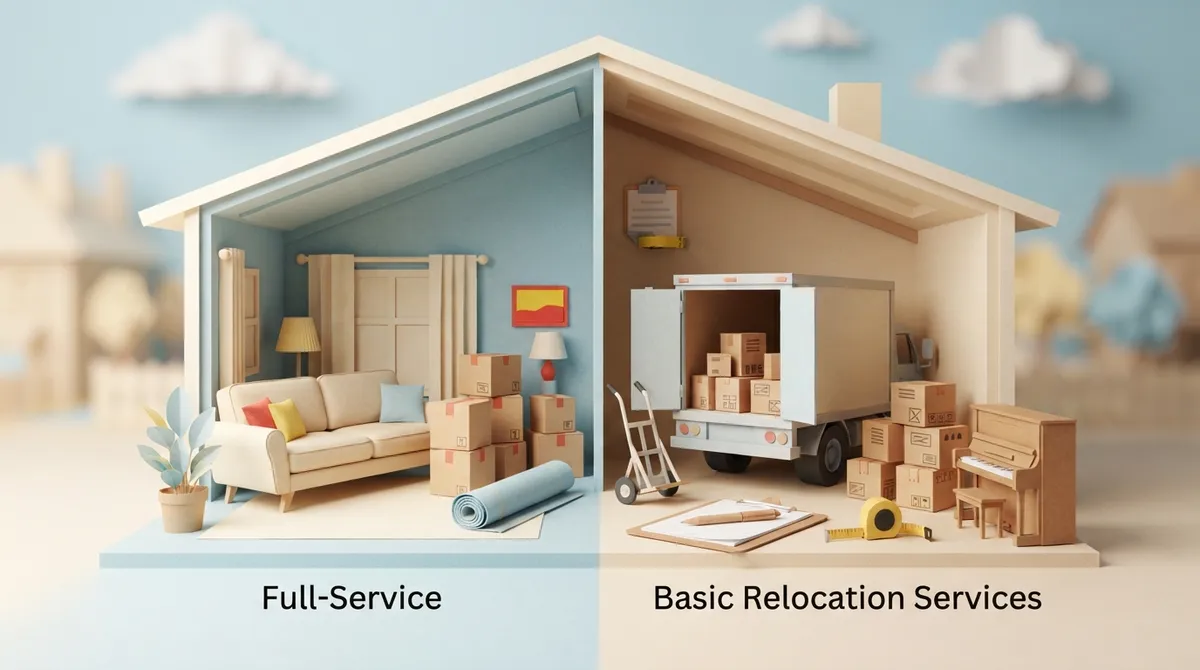
- Full-service relocation covers planning, packing, loading, transport, and unpacking, freeing your time, while basic help has you pack and prep yourself, usually at a lower cost.
- Always get a written, itemized estimate and confirm whether it is binding or non-binding, since a low quote that omits packing, fuel, or stair fees can rise on moving day.
- Basic carrier liability often pays by weight rather than item value, so ask about full-value protection, deductibles, and exclusions, and photograph valuables before the move.
- Verify that your mover is licensed and insured, and for U.S. interstate moves, confirm FMCSA registration and know whether you are dealing with a mover or a broker.
- Price drivers include shipment volume, distance, access conditions like stairs and long carries, specialty items such as pianos, and timing, with weekdays often cheaper than busy weekends.
- Watch for red flags such as quotes given sight unseen, pressure for large upfront deposits, vague non-itemized pricing, or a company unable to say who will carry your belongings.
Moving is a big deal. Whether you are leaving a family home in Lakeland or heading out of state, one choice shapes the whole experience: how much help do you want? That is where relocation services come in. Some people need a truck and two strong backs. Others want a team to plan, pack, load, haul, and unpack while they sip coffee and point at the new kitchen.
The good news? You have options, and none of them is wrong. The trick is matching the level of help to your home, your budget, and your energy. In this friendly guide, we will compare two popular paths: full-service relocation services and basic, transport-focused help. You will learn what each one includes, what it costs you in time and money, and how to pick with confidence.
We will also share smart questions to ask, red flags to watch for, and tips for special situations like pianos, antiques, and retirement moves. Grab a cup of something warm and let us sort this out together.

What Do Relocation Services Actually Include?
In the moving world, relocation services mean more than driving a truck. They cover the planning and transport of your household goods. Depending on the provider and package, that can include a pre-move survey, packing, loading, transport, delivery, unpacking, and storage.
Think of it like a menu. You can order one dish or the whole feast. Local moves stay within the same area. Interstate moves cross state lines. International moves add freight coordination, customs rules, and extra paperwork.
The most important step is to confirm which tasks the mover handles and which tasks stay on your plate. A clear, written scope avoids surprises later.
Common Service Building Blocks
- Pre-move survey or estimate: A walk-through or video review to size up your belongings.
- Packing and supplies: Boxes, paper, wrap, and trained hands to use them.
- Loading and unloading: The heavy lifting, done safely.
- Transport: Local, long-distance, or interstate hauling.
- Storage: Short-term holding if your dates do not line up.
- Unpacking and setup: Putting things where you want them.
The Two Paths: Full-Service vs. Basic Help
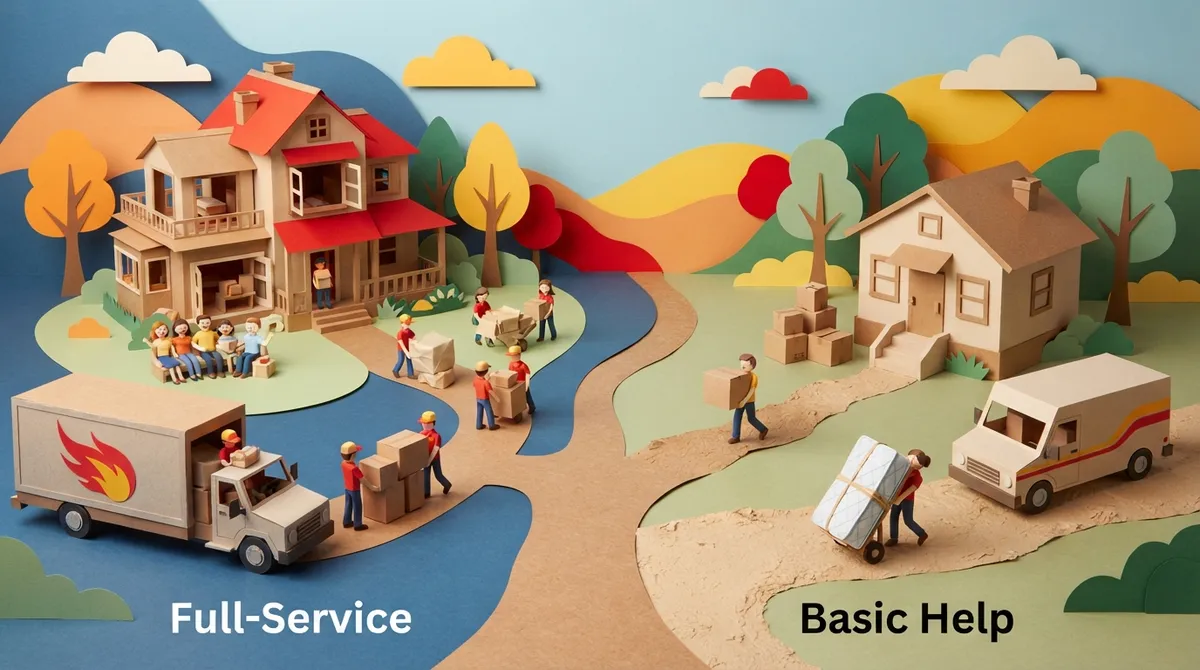
Most families land on one of two paths. Full-service relocation services handle nearly everything. Basic help usually means you pack your own items, and the crew loads, drives, and unloads. There are also labor-only options, which we compare in this look at full service versus labor only residential moving.
Full-Service Relocation Services
With full service, the crew does the heavy planning and the heavy lifting. They pack your kitchen, wrap your furniture, load the truck, drive it, and set up at the other end. Many families love this path because it frees up their time for the things only they can do, like handling school forms or saying goodbye to neighbors.
Basic, Transport-Focused Help
With basic help, you do the packing and prep. The movers load, transport, and unload. This can save money if you have time and a good system. It does mean you carry more of the risk if something is packed poorly, so it pays to be careful.
Side-by-Side Comparison
| Feature | Full-Service Relocation | Basic Transport Help |
|---|---|---|
| Packing | Done by the crew | Done by you |
| Loading and unloading | Included | Included |
| Unpacking | Optional or included | Done by you |
| Furniture wrap and disassembly | Usually included | May cost extra |
| Your time commitment | Low | High |
| Typical cost level | Higher | Lower |
| Best for | Busy families, big homes, seniors | Small moves, hands-on planners |
Notice that neither column is perfect for everyone. A big household with a tight schedule leans toward full service. A tidy two-bedroom with a patient owner might do great with basic help.
How Much Do Relocation Services Cost?
Price depends on several things. Moving companies generally look at shipment size or weight, distance, packing and handling needs, access conditions like stairs or long carries, timing, storage, and optional extras. A third-floor walk-up costs more labor than a ranch with a driveway.
Here is the friendly truth: the cheapest quote is not always the best deal. A low number that leaves out packing, fuel, or heavy-item fees can balloon on moving day. We cover the details in our guide on what factors determine moving company pricing.
What Drives Your Price Up or Down
- Volume: More furniture and boxes means more time and truck space.
- Distance: Local moves are often billed by time. Long-distance moves lean on weight and miles.
- Access: Stairs, elevators, tight halls, and long walks add effort.
- Specialty items: Pianos, safes, and hot tubs need extra gear and people.
- Timing: Busy weekends and month-end dates can cost more. Weekdays may be easier on your wallet.
- Add-ons: Storage, unpacking, and debris removal.
Getting a Good Estimate (And Understanding It)
A solid estimate is your best friend. It should be written, itemized, and clear about services, shipment details, and charges. Always compare quotes that cover the same scope. Comparing a full-service quote to a basic one is like comparing a sandwich to a steak dinner.
For U.S. interstate household moves, federal consumer guidance from the Federal Motor Carrier Safety Administration encourages you to know whether your estimate is binding or non-binding and to review the order for service and bill of lading before you sign.
- Ask for the estimate in writing. Verbal promises vanish fast.
- Check what is included. Packing, wrap, fuel, stairs, and long carries.
- Ask if it is binding or non-binding. A binding estimate sets the price. A non-binding one can change.
- Confirm delivery windows. Know when to expect your belongings.
- Ask about cancellation terms. Plans change, so know the rules upfront.
- Read before you sign. Every page, every line.
Want to see how this works in practice? Here is what to expect from a free moving estimate.
Protection: Insurance, Liability, and Peace of Mind
Here is something many people miss. Basic carrier liability is not the same as full-value protection. Basic coverage often pays by weight, not by what your item is actually worth. So a heavy but cheap item and a light but precious one may be treated very differently.
Ask what valuation or insurance options apply, what exclusions and deductibles exist, and how to file a claim. Coverage terms differ by provider and by jurisdiction, so never assume.
It also helps to confirm your mover is properly licensed and insured. Not sure what to look for? Check out these tips on spotting licensed and insured movers before you book.
Quick Protection Checklist
- Ask which valuation options are offered.
- Find out the deductible, if any.
- Learn which items are excluded or limited.
- Photograph valuables before the move.
- Keep your inventory list handy for claims.
Local vs. Long-Distance vs. International Moves
The type of move changes the kind of help you need.
Local Moves
Local moves in places like Lakeland, Winter Haven, Davenport, and Dover are often hourly. A skilled crew works fast, so efficiency matters more than a low hourly rate. A team that loads smart can beat a cheaper team that works slowly.
Long-Distance and Interstate Moves
Farther moves involve scheduling, weight-based pricing, and delivery windows. For U.S. interstate moves, check that the mover is registered with the FMCSA and review complaint and safety information. Also know the difference between a mover and a broker. A broker arranges transportation but does not itself haul your shipment, so ask which carrier will handle your belongings. Our article on what to know before a long distance move is a helpful next read.
International Moves
Moving abroad adds freight coordination, customs inspections, restricted goods, possible duties or taxes, and country-specific paperwork. A mover can help with documentation, but you still need to verify the rules and give accurate inventories and declarations. This is a specialized path, so plan early.
Which Option Fits Your Situation?
Let us bring this to real life. Different households have different needs, and that is perfectly normal.
Local Homeowners and Large Families
If you are moving from a big home with lots of bulky furniture, full service is often a lifesaver. Packing a whole house takes days, not hours. A crew that handles it quickly lets you focus on your family. See packing and moving services in Polk County for what that can look like.
Retirees and Seniors
Moving into a retirement home should feel calm, not exhausting. Patient help with heavy lifting, organized packing, and gentle unpacking makes a world of difference. Take a look at these senior moving services in Polk County to see how support can be tailored.
Luxury Apartment and High-Value Home Movers
When you are moving into a high-end building, details matter. Elevator reservations, floor protection, and careful wrapping protect both your belongings and the property. Full-service care shines here because the crew handles the logistics for you.
Specialty Item Owners
Pianos, antiques, and gun safes need real know-how. Weight, balance, and fragility call for the right tools and trained hands. If you own awkward treasures, read how to choose specialty item movers you can trust.
Budget-Minded Planners
If you have time, a tidy home, and a good eye for packing, basic help can stretch your dollars. Just be honest about how much you can handle. Many people underestimate the time packing takes.
Moving Industry Snapshot
Moving is more common than you might think. U.S. Census data indicates that 11.8% of the U.S. population moved in 2024, down from 12.1% in 2023 and 12.6% in 2022. Moving-industry analysis based on Census data estimates that about 40.1 million adults moved in 2024, though that is an estimate and does not count only people who hired professionals. Survey-based figures also suggest that roughly 71% of movers stayed within the same region while 29% moved to a different region. In other words, a lot of folks are making local and regional moves, just like many of our Polk County neighbors.
Red Flags to Watch For
Most movers are honest and hardworking. Still, a few warning signs deserve attention.
- A quote given sight unseen with no questions asked.
- Pressure to pay a large deposit upfront.
- No clear license or insurance information.
- Vague, non-itemized pricing.
- A company that cannot say who will actually carry your items.
Avoiding these traps is easier than it sounds. Our list of mistakes to avoid when hiring local residential movers walks through the biggest ones.
How to Choose: A Simple Decision Guide
Still on the fence? Try this quick step-by-step approach.
- List your must-haves. Do you need packing, specialty handling, or storage?
- Be honest about your time. Can you really pack a house in two weeks?
- Set a realistic budget. Include extras like supplies and tips.
- Get two or three written quotes. Make sure they cover the same scope.
- Verify credentials. Check licensing, insurance, and reviews.
- Pick the team that communicates clearly. Good communication usually means a good move.
If you want a deeper walkthrough, our guide on how to choose full service movers in Polk County breaks it down even further.
A Word on Trust and Local Care
At DynaMight Movers, we believe a move should feel like help, not a headache. We are a licensed and insured moving company serving Polk County and nearby areas, offering local and long-distance moves, specialty-item handling, and heavy lifting with transparent pricing. Your estimate is your price, with no moving-day surprises. Curious what neighbors think? Visit us on Google — DynaMight Movers and read what our customers have to say.
Final Thoughts
So, which wins: full-service or basic relocation services? The honest answer is that it depends on you. Full service buys time, comfort, and lower stress. Basic help saves money if you are willing to do more yourself. Either way, the best move comes from clear scope, written quotes, solid protection, and a team you trust.
Ready to take the next step? Get a free estimate and see which option fits your home and budget, or call us at (866) 349-7719 to talk it through with a friendly person. We would love to help you move with confidence.
FAQs
Q: What do relocation services include?
A: Relocation services cover the planning and transport of your household goods. Depending on the package, they can include a pre-move survey, packing, loading, transport, delivery, unpacking, and storage. Always ask for a written list so you know exactly what is covered.
Q: What is the difference between a moving company and a relocation company?
A: The terms often overlap. A moving company focuses on packing, loading, and hauling, while a relocation company may also coordinate extras like storage, unpacking, and paperwork. What matters most is the written scope, so confirm exactly which tasks are included.
Q: What is the difference between binding and non-binding moving estimates?
A: A binding estimate sets the price for the services listed in writing. A non-binding estimate is a best guess and the final cost can change based on actual weight or services. Ask which type you are getting before you sign.
Q: Do relocation services include packing, storage, and unpacking?
A: Many do, but not all. Packing, storage, and unpacking are often optional add-ons or part of a full-service package. Ask your mover to list what is included so you are not surprised by extra charges.
Q: How do I choose a reliable moving company?
A: Start by checking licensing and insurance, then read reviews and compare itemized written quotes. For U.S. interstate moves, confirm the mover is registered with the FMCSA. Choose a team that explains coverage options clearly and answers your questions without pressure.