
Key Takeaways
- Local piano moves in 2026 typically cost about $150 to $650, with uprights usually cheaper than grands. Stairs, tight turns, and long carries can raise the price, so get a written, itemized quote.
- Give movers the piano type, approximate size, both addresses, and a count of stairs and tight spots so the quote matches the real job and surprises are avoided on moving day.
- Never let a piano be carried by its legs. Professional crews use piano boards, dollies, straps, and padding, and grands often need partial disassembly (legs and lyre removed).
- Before booking, confirm the mover is licensed and insured, ask exactly what coverage applies to the piano and your floors, walls, and doorframes, and get the answers in writing.
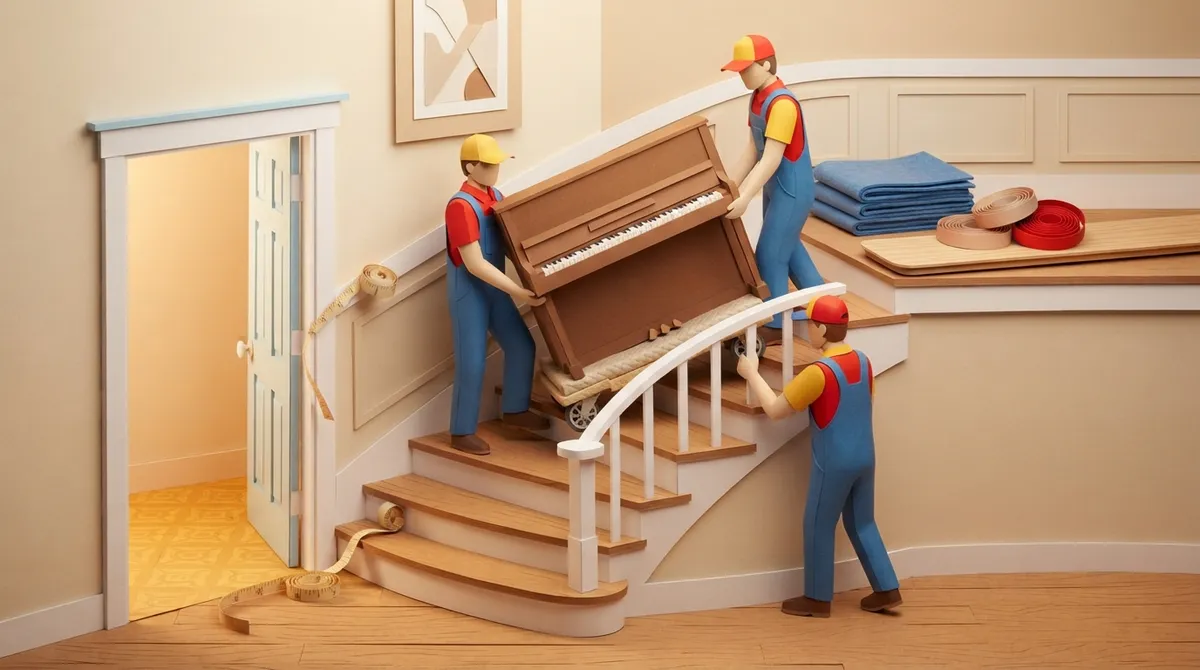
- Measure the piano and every doorway, hallway, turn, and staircase on the route, then clear rugs, décor, and items on top of the piano, and open and prop doors along the path.
- Wait a bit after delivery before tuning, since bumps and humidity or temperature changes can shift the instrument, and ask your technician or mover when tuning is best.
Your piano is more than furniture. Maybe it came from Grandma's living room. Maybe your kids learned scales on it. Maybe it's the centerpiece of your home. And now it needs to move. Take a deep breath, because you're in good hands with the right plan.
Pianos are heavy, awkward, and full of delicate parts. An upright can weigh several hundred pounds. A grand can weigh even more. One wrong move can hurt your back, scratch your floors, or damage the instrument. That's why so many families hire local piano movers instead of trying it themselves with a few friends and a dolly.
In this guide, we'll walk through how professional crews protect your piano, what it costs in 2026, how to get an accurate quote, and what to ask before you book. Whether you're a Polk County homeowner moving across town, a retiree downsizing, or a family leaving a large estate, you'll find clear, friendly answers here.

What Do Local Piano Movers Actually Do?
Local piano movers transport pianos within a nearby service area. They use special tools and trained techniques that fit the instrument and the route. Some are dedicated piano-moving companies. Others are household moving companies with real piano experience.
A good crew can handle several types of pianos:
- Spinet pianos: compact and lighter, but still tricky on stairs.
- Upright pianos: tall, heavy, and top-heavy, so they need careful tilting and strapping.
- Baby grand pianos: smaller grands that often need partial disassembly.
- Grand pianos: the largest and most delicate, usually moved on a piano board.
If you want a deeper look at the process, check out our guide on how to move a piano safely without damaging it.

Why Is Moving a Piano So Risky?
Pianos hide a lot of fragile parts inside a heavy wooden body. Strings are under tension. The action, the part that makes the keys work, is finely tuned. Legs and lyres can snap if the piano is lifted the wrong way.
Here are the most common risks of a do-it-yourself piano move:
- Injury to people. Pianos shift fast. A slip on the stairs can cause serious harm.
- Damage to the piano. Cracked legs, scratched finish, and internal damage are common.
- Damage to your home. Floors, doorframes, and walls take a beating from heavy, wheeled loads.
- Costly repairs. A few hundred dollars saved can turn into a much bigger repair bill.
If you're weighing your options, our article on DIY vs. specialty item movers breaks down when it's smart to call a pro.
What Equipment Do Professional Piano Movers Use?
Experienced crews don't just muscle the piano around. They bring the right gear. Here's what you can expect to see on moving day:
- Piano skids or boards: a padded board the piano is strapped to, which keeps it stable and protects the legs.
- Suitable dollies: heavy-duty carts made for concentrated weight.
- Moving straps and harnesses: these help the crew lift and control the load safely.
- Thick protective padding: blankets and wraps guard the finish and your walls.
- Floor protection: runners and boards to shield hardwood, tile, and carpet.
Grand pianos often need partial disassembly. The crew may remove the legs and the lyre, then secure the instrument on its side on a piano board. A piano should never be carried by its legs. Pros know this, and it's one of the big reasons to hire them.
How Much Do Local Piano Movers Cost in 2026?
Let's talk money, because that's often the first question. Prices vary based on piano size, distance, stairs, and access. Online sources give a range of figures, so treat them as rough planning numbers, not promises.
| Source (2026) | Reported Range or Average |
|---|---|
| Extra Space Storage | $150–$650 overall; uprights on the same floor about $150–$350; grands about $250–$650 or more |
| ConsumerAffairs | About $275 for an upright and $450 for a grand (survey of 13 piano movers) |
| MoveAdvisor | $250–$550 average for local piano moves |
Because these numbers differ, your best move is to get a written, itemized quote from local providers. For a broader view of how pricing works, see our 2026 guide to how movers charge.
What Changes the Price?
- Piano type and size: a grand costs more than a spinet.
- Distance: longer local trips cost more.
- Stairs and elevators: every flight adds time and risk.
- Tight turns and long carries: narrow halls or a long walk from the truck can raise the price.
- Disassembly and special handling: grands may need extra steps.
- Hoisting or special scheduling: these are rare but add cost.
What Should You Tell Movers to Get an Accurate Quote?
The more details you share, the more reliable your quote will be. Surprises on moving day are no fun, so give your mover a clear picture up front. Here's a simple checklist:
- Piano type and brand. Upright, spinet, baby grand, or grand.
- Approximate size. Measure height, width, and depth if you can.
- Pickup and drop-off addresses. This helps estimate the distance.
- Stairs, steps, and elevators. Count them at both locations.
- Tight spots. Mention narrow doorways, sharp turns, and landings.
- Outside access. Note steep driveways, uneven paths, or long carries.
- Timing needs. Share your preferred date and any deadlines.
Want to understand what a good estimate looks like? Read what to expect from a free moving estimate.
How Do You Prepare Your Home for Piano Moving Day?
A little prep makes the day smoother and safer. Think of it as setting the stage for your movers.
Measure the Piano and the Whole Route
Measure the piano first. Then measure every doorway, hallway, turn, staircase, landing, and outdoor path from the old spot to the new one. Tell your mover about any tight areas ahead of time so they can bring the right crew and tools.
Clear the Path
- Move rugs, small furniture, and decor out of the way.
- Remove loose items from the top of the piano, like photos, plants, and sheet music.
- Close the keyboard lid and make sure it's secure.
- Open all doors along the route and prop them if possible.
- Keep kids and pets in a safe room during the move.
Plan the Landing Spot
Decide exactly where the piano will go in your new space. Pianos do best away from direct sunlight, heating vents, and drafty windows. In Florida, humidity matters too, so choose a stable spot inside your home.
Do Piano Movers Handle Stairs, Tight Turns, and Elevators?
Yes, experienced crews do. But these conditions affect price, staffing, and method. A piano on the first floor with a flat path is the simplest move. Stairs, tight corners, and long carries need more people and more care.
This is exactly why you should be honest about access when you ask for a quote. If a crew shows up expecting an easy job and finds three flights of stairs, you may see delays or extra charges. Tell them everything up front, and you'll get a plan that fits.
Our crew also shares more on this in heavy lifting moving tips, which is helpful for any bulky item.
How Do You Find Reliable Local Piano Movers Near You?
Good news: you don't need to guess. Use this simple step-by-step approach:
- Ask about piano experience. Has the crew moved your type of piano on a similar route?
- Get written, itemized estimates. Compare what each quote includes.
- Ask how extra charges work. Find out what could change the price on moving day.
- Check credentials. Confirm licensing and insurance, and ask for proof.
- Read recent reviews. Look for comments about care, punctuality, and communication.
- Ask about coverage. Learn what happens if the piano or your property is damaged.
For U.S. interstate household-goods moves, you can check a mover's registration and complaint information through the Federal Motor Carrier Safety Administration. Local and intrastate rules vary by state, so verify any state or local credentials, too. Need help with that step? Here are 9 ways to spot licensed and insured movers in Polk County.
What Insurance or Coverage Should You Ask About?
This is one of the most important questions you can ask. A piano is a valuable item, sometimes with deep sentimental value. You want to know exactly what's protected.
- Ask whether the company is licensed and insured.
- Ask what coverage applies to the piano itself.
- Ask what coverage applies to your floors, walls, and doorframes.
- Ask how claims are handled and how long they take.
- Check your homeowners or renters policy for any extra protection.
Get the answers in writing. A trustworthy mover will be happy to explain. If you want more help, read how to choose insured movers you can actually trust.
Should You Tune Your Piano After a Move?
Great question. Moving can affect a piano's tuning. Bumps during transport, plus changes in temperature and humidity, can shift the instrument's condition. That's especially true in Florida, where humidity swings are common.
Most owners wait a bit after delivery so the piano can settle into its new environment. Ask your piano technician or mover when to schedule tuning. The best timing depends on your instrument and your home's climate. Don't panic if it sounds a little off at first. That's normal after a move.
Why Choose DynaMight Movers for Your Piano Move?
At DynaMight Movers, we treat your piano like the treasure it is. We're a licensed and insured moving company serving Lakeland, Winter Haven, Davenport, Dover, and the rest of Polk County. We handle specialty items and heavy lifting every day, and we believe in transparent pricing with no hidden fees.
Whether you're moving a family heirloom upright, relocating from a big estate, or heading into a new retirement home, our crew brings the strength and care the job needs. You can also visit us on Google and see what DynaMight Movers customers say. For more on choosing the right pro, see our guide on how to choose specialty item movers you can trust.
Final Thoughts: Move Your Piano With Confidence
Moving a piano doesn't have to be scary. With the right local piano movers, the right prep, and clear communication, your instrument can arrive safe and ready to play. Measure your route, share the details, ask about coverage, and get a written quote. Those few steps make all the difference.
Ready to take the stress out of your piano move? Get a free estimate today, or call us at (866) 349-7719. We'd love to help you keep the music going in your new home.
FAQs
Q: How much do local piano movers cost?
A: In 2026, most sources report local piano moves running roughly $150 to $650, depending on the piano and the route. Uprights usually cost less than grands. Always get a written, itemized quote, since stairs and tight access can change the price.
Q: Do piano movers move both upright and grand pianos?
A: Yes, experienced crews move spinet, upright, baby grand, and grand pianos. Grand pianos often need partial disassembly and a piano board for support. Be sure to tell your mover exactly which type you have.
Q: What information do I need to give for a piano-moving quote?
A: Share the piano type and size, both addresses, and the number of stairs. Mention tight turns, narrow doorways, and long carries too. The more details you give, the more accurate your quote will be.
Q: Should I tune my piano before or after a move?
A: Most owners tune after the move, once the piano has settled into its new space. Moving and changes in humidity can shift the tuning. Ask your piano technician or mover for the best timing.