
Key Takeaways
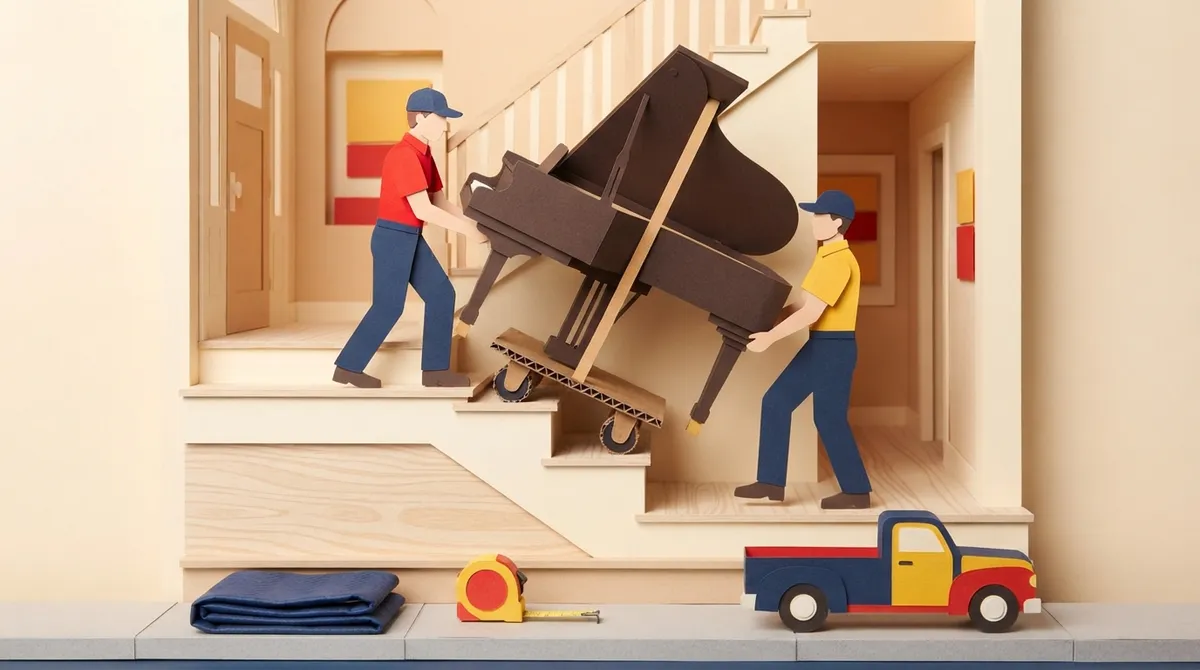
- Hiring a crew is far safer than a DIY move: pianos can weigh several hundred pounds, and dropped corners, cracked finishes, and back injuries are common risks.
- Confirm licensing and proof of insurance, and ask specifically about valuation or damage coverage for your piano before booking anyone.
- In 2026, local upright moves typically cost about $150 to $350 and grand pianos about $250 to $650 or more, while long-distance moves run roughly $1,000 to $2,000.
- Stairs (often $40 to $100 per flight), long carries, and tight access are the main cost drivers, so confirm whether your quote already includes them.
- Give movers your piano type, both addresses, stair counts, and tight spots, and send photos or a video walkthrough for a more accurate written estimate.
- Wait a few weeks after the move before tuning, since shifts in temperature and humidity can affect the strings, and keep the piano away from sunlight, vents, and exterior doors.
You love your piano. Maybe it has been in your family for decades, or maybe you just bought it and cannot wait to play. Either way, the thought of moving it can feel scary. Pianos are heavy, awkward, and easy to damage. One bad turn on a staircase and you could have a costly mess on your hands.
The good news? You do not have to figure it out alone. When you search for piano movers near me, you are taking the first smart step toward a safe move. This friendly guide walks you through how to find the right crew, what to ask, what it costs in 2026, and how to prepare. Whether you live in Polk County, are moving across Central Florida, or are heading out of state, you will find clear, simple answers here.
Let's get your piano where it needs to go, in one beautiful piece.

Why Piano Moving Is Different From a Regular Move
A piano is not like a couch or a dresser. It is a delicate musical instrument packed inside heavy, awkward furniture. An upright piano often weighs several hundred pounds. A grand piano can weigh even more, and it has a long, curved shape that is hard to turn.
Inside the case are thousands of tiny moving parts. Strings, hammers, and a soundboard all sit under tension. A hard bump can crack a leg, scratch the finish, or knock the instrument out of shape.
That is why piano movers near me is such an important search. A good crew knows how to balance the weight, protect the finish, and plan the route before anyone lifts a finger.
The Risks of Moving a Piano Yourself
It can be tempting to call a few friends and pizza-bribe them into helping. But DIY piano moves can cause real harm. Here is what can go wrong:
- Injuries: Pianos are heavy and shift without warning. Back strains, crushed fingers, and worse can happen fast.
- Damage to the piano: Dropped corners, snapped legs, and cracked finishes are common.
- Damage to your home: Gouged floors, scraped walls, and broken door frames add up.
- Hidden costs: A repair bill can easily top what a pro would have charged.
If you want to compare the two paths in more detail, our guide on piano movers vs. DIY breaks it down well.

Types of Pianos and Why It Matters
Not every piano moves the same way. The type you own changes the crew size, the equipment, and the price. Knowing what you have helps you get a better quote.
| Piano Type | Typical Handling | What to Expect |
|---|---|---|
| Spinet or Console | Smaller upright, padded and strapped | Lighter, but still needs careful handling |
| Upright (Studio) | Padded, strapped, and moved on a dolly or skid | Heavy and top-heavy, so balance is key |
| Baby Grand | Legs and pedals removed, set on a piano board | Needs disassembly and reassembly |
| Grand or Concert Grand | Full disassembly, board, and larger crew | Often priciest; may need extra equipment |
| Digital or Electric | Lighter, often boxed or padded | Much easier, but still delicate |
Most professional movers protect the instrument with thick padded blankets and straps. For grand pianos, the crew usually removes the legs and pedals, secures the piano on a board or skid, and puts everything back together at the new home.
How to Find Reliable Piano Movers Near Me: 6 Simple Steps
Finding the right team does not have to be stressful. Follow these steps and you will feel confident in your choice.
- Search locally. Start with "piano movers near me" and look at local companies in your area. Local crews know the roads, the neighborhoods, and the common access challenges.
- Check experience. Ask if they move your specific piano type often. A crew that moves grand pianos every week is a better fit than one that tries it once a year.
- Read reviews. Look for comments about care, punctuality, and honesty. Pay attention to how the company handles problems.
- Confirm licensing and insurance. This protects you and your piano. We cover how to do this in the next section.
- Get a written estimate. A clear, written quote helps you avoid surprise charges.
- Ask about the plan. A good mover can explain how they will protect the piano and get it through your home.
If you want a deeper look at what to ask, our post on how to choose specialty item movers you can trust is a great companion read.
Specialists vs. General Movers
Here is a question we hear a lot: can regular movers move a piano, or do you need a piano specialist? The honest answer is that it depends on the crew. Some general moving companies are very skilled with pianos and have the right gear. Others are not.
What matters most is experience, equipment, and insurance. Ask direct questions about the piano type, the straps and boards they use, and how many pianos they have moved. A company that handles heavy lifting every day often has the strength and training to do the job well.
Check Licensing and Insurance First
This step protects your wallet and your peace of mind. Before you book anyone, confirm that the company is licensed and insured. For moves that cross state lines, licensing matters even more, so verify it where it applies.
The Federal Motor Carrier Safety Administration offers helpful tips on protecting your move, including how to spot reliable carriers and avoid scams.
Here is a quick checklist to run through:
- Ask for proof of insurance and read what it covers.
- Ask about valuation or damage coverage for your piano.
- Find out how damage claims are handled and how long they take.
- Get all service terms in writing before moving day.
Our guide on 9 ways to spot licensed and insured movers in Polk County walks through this in plain language.
What Information to Give Movers for an Accurate Estimate
The more details you share, the better your quote will be. Piano movers need to see the full picture of the job. Here is what to gather before you call:
- The piano type, brand, and rough size
- Your pickup and delivery addresses
- The number of stairs at each location
- Any elevators, tight turns, or narrow doorways
- The distance from your front door to the truck
- Any uneven paths, steep driveways, or outdoor steps
Photos or a short video walkthrough can help a lot. Show the piano, the path out of your home, and the entry at the new place. This helps the crew plan ahead and quote more accurately.
Want a no-pressure start? You can get a free estimate and share your details right away.
How Much Do Piano Movers Cost in 2026?
Price is the question on everyone's mind. Costs vary by market and job conditions, but here are some helpful numbers from 2026 sources.
| Move Type | Typical Price Range |
|---|---|
| Local upright piano move | About $150 to $350 (average near $275) |
| Local grand piano move | About $250 to $650 or more (average near $450) |
| Overall local range | Roughly $150 to $650 |
| Long-distance piano move | About $1,000 to $2,000 |
These figures come from ConsumerAffairs and Extra Space Storage, which both reported updated numbers in 2026. Your own price may land above or below these ranges depending on your situation.
What Makes the Price Go Up
A few common factors can raise your total. Knowing them helps you avoid surprises.
- Stairs: Stair charges often run about $40 to $100 per flight. Moving a piano to a second or third level can add around $100 on average, and tricky staircases can cost more.
- Long carries: A long walk from the front door to the truck takes more time and effort.
- Tight spaces: Narrow halls, sharp turns, and small doorways slow things down.
- Special equipment: Rare jobs may need hoisting or a crane, which adds cost.
- Distance: Local moves are often a flat rate within a service area, while long-distance moves depend on mileage and handling.
Always ask whether your quote already includes stairs and tough access. Then you will know what you are really paying. For a broader look at pricing, check out how movers charge in 2026.
Local vs. Long-Distance Piano Moves
Where you are heading changes the plan. Both types are doable, but they work a little differently.
Local Piano Moves
Local moves usually happen in one day. Pricing is often a flat rate inside the company's service area. This is the simplest option and often the most affordable. If you are moving across Lakeland, Winter Haven, or Davenport, a local crew can usually handle it quickly.
Long-Distance Piano Moves
Longer trips need more planning. Your piano may ride on its own, or it may travel as part of a larger household shipment. The longer it stays in the truck, the more important it is to pad, strap, and secure it well. Costs depend on distance, handling, and access at both ends.
If you are planning a bigger move, read what you should know before a long-distance move to get ready.
How to Prepare Your Piano and Your Home
A little prep makes moving day smoother. Here is a simple plan you can follow.
- Measure the path. Check doorways, hallways, and stair widths so there are no surprises.
- Clear the way. Move rugs, furniture, and clutter out of the route.
- Remove loose items. Take photos, books, and decor off the piano. Secure the lid and the keyboard cover.
- Protect your floors. Ask the crew about floor runners or mats, especially for hardwood and tile.
- Tell the crew about quirks. Mention sticky doors, steep driveways, or tight spots ahead of time.
- Plan the new space. Pick a spot away from direct sunlight, vents, and exterior doors so the piano stays in good shape.
Florida homes bring their own challenge: humidity. Try to place your piano in a climate-controlled room, away from open windows and damp areas.
Do You Need to Tune Your Piano After a Move?
In most cases, yes. Moving shifts the instrument, and changes in temperature and humidity can affect the strings. Many owners wait a few weeks to let the piano settle into its new home before booking a tuning. A local piano technician can tell you the best timing.
The Piano Technicians Guild is a trusted resource for finding a qualified piano technician in your area.
Red Flags to Watch For
Most movers are honest, hardworking people. Still, it helps to know the warning signs. Be careful if a company:
- Gives a quote without asking about your piano or access
- Refuses to put anything in writing
- Cannot show proof of insurance
- Asks for a large cash deposit upfront
- Has no real local presence or clear contact details
Our post on mistakes to avoid when hiring local movers covers more of these pitfalls so you can stay a step ahead.
Who Needs Piano Movers the Most?
Almost anyone with a piano can benefit from a pro crew, but a few situations stand out:
- Grand piano owners: These instruments need disassembly and a trained crew.
- Homes with stairs or tight access: Balance and teamwork matter most here.
- Valuable or antique pianos: A single slip can mean a big loss.
- Seniors and retirees: If you are downsizing, a skilled crew protects both your piano and your back.
- Families leaving large homes or estates: A piano is often one of many heavy items, so pros save time and stress.
- Luxury home and apartment movers: Careful handling protects polished floors, elevators, and building rules.
Why Local Piano Movers in Polk County Make Sense
A local team already knows the area. They understand neighborhood layouts, tight driveways, and typical Florida home designs. That local know-how can save time and reduce risk.
At DynaMight Movers, we are a licensed and insured moving company serving Polk County, including Lakeland, Winter Haven, Davenport, and Dover. We offer transparent pricing, handle specialty items, and bring real heavy-lifting strength to every job. You can see what our DynaMight Movers customers say on Google to learn more about how we treat people and their belongings.
Want to learn more about our approach? Read how you move a piano safely without damaging it for tips straight from the pros.
Final Thoughts
Finding great piano movers near me comes down to a few simple things: experience, insurance, clear pricing, and a friendly crew that treats your piano like it matters. Share good details, get a written estimate, and ask smart questions. Do that, and you will feel confident from the first phone call to the final note played in your new home.
Ready to move your piano the safe way? Get a free estimate today, or call us at (866) 349-7719 to talk with our friendly team. We would love to help you protect your piano and make your move feel easy.
FAQs
Q: How much does it cost to hire piano movers near me?
A: In 2026, local piano moves often run from about $150 to $650, with uprights usually costing less than grand pianos. Stairs, long carries, and tight access can raise the price, so always ask what your quote includes.
Q: Do piano movers move both upright and grand pianos?
A: Yes, most experienced piano movers handle both. Grand pianos take a bit more work because the crew removes the legs and pedals, secures the piano on a board, and reassembles it at the new home.
Q: What information should I give piano movers for an estimate?
A: Share your piano type and size, both addresses, the number of stairs, any tight turns or narrow doors, and the distance to the truck. Photos or a quick video walkthrough make your quote even more accurate.
Q: Are piano movers insured, and what does that cover?
A: Reputable piano movers carry insurance, but coverage varies, so ask for proof and read the details. Also ask about valuation or damage coverage and how claims are handled before you book.
Q: Do I need to tune my piano after it has been moved?
A: In most cases, yes. A move and changes in temperature or humidity can shift the strings, so many owners wait a few weeks and then book a tuning with a local piano technician.