
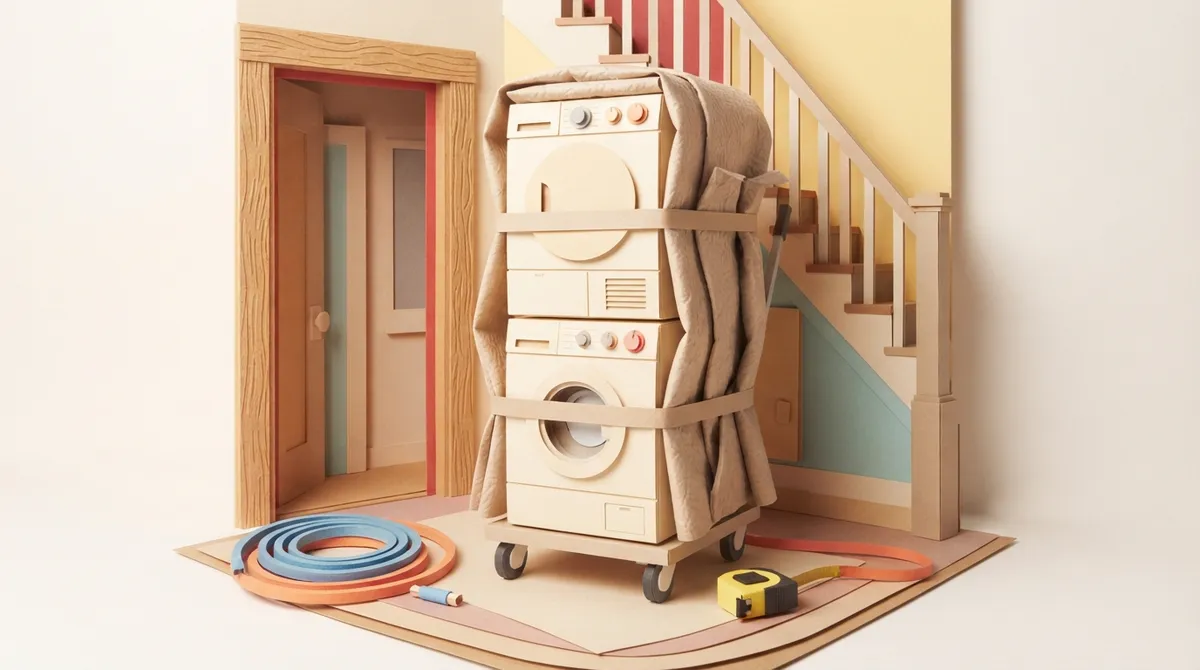
Key Takeaways
- Always ask a mover exactly what is included, since some crews only lift and transport while others also disconnect hoses and cords, and gas lines usually need a separate licensed technician.
- Prepare a washer by running an empty cycle, unplugging it, shutting off water valves, disconnecting hoses, leaving the door open 24 hours to dry, and reinstalling transit bolts.
- Never lay a washer or dryer on its side unless the manufacturer allows it, since tipping can damage internal parts; movers should use upright transport, dollies, blankets, and straps.
- Measure appliances and the full route, including doorways, stairs, turns, elevators, and the final spot, then share these details with movers so they bring the right crew and gear.
- Get a written, itemized estimate based on labor time, distance, stairs, and whether disconnect and reconnect are included, since prices vary widely and no single national rate applies.
- After delivery, level the washer, check every hose connection for leaks, run a test cycle, and photograph any damage immediately to speed up the claims process.
Let's be honest: nobody wakes up excited to move a washer and dryer. These two appliances are heavy, awkward, and packed with parts that can leak, rattle, or crack if they are handled the wrong way. One slip on the stairs and you could end up with a dented machine, a scratched floor, or a sore back.
That is exactly why so many people look for washer and dryer movers. Whether you are a Polk County homeowner heading across town, a family leaving a big house, or a retiree moving into a smaller place, getting laundry appliances safely out the door can feel like the hardest part of the day.
The good news? With a little prep and the right crew, it does not have to be stressful. In this guide, we will walk through what washer and dryer movers actually do, how to get your appliances ready, what the job may cost, and what to ask before you book. Think of it as a friendly checklist from people who have carried a lot of laundry machines up a lot of stairs.

What Do Washer and Dryer Movers Actually Do?
Washer and dryer movers are moving professionals who transport laundry appliances from one place to another. The job usually includes carrying the machines, loading them onto a truck, padding them with moving blankets, and securing them so they do not shift on the road.
Here is the part many people miss. The service can vary a lot from one company to the next. Some crews only handle the physical lifting and transport. Others may also help with disconnecting and reconnecting hoses and cords. Utility work, like gas lines, is often handled separately.
For example, some large national van lines state that their crews do not disconnect, service, repair, or reinstall appliances at all. They suggest hiring a qualified third-party technician for that part. So before you book anyone, ask exactly what is included.
Common Services You May See Offered
- Carrying and loading: Moving the machines safely out of your home and onto the truck.
- Padding and wrapping: Covering the appliances with moving blankets to prevent scuffs and dents.
- Securing the load: Using straps and tie-downs so nothing slides or tips.
- Unloading and placement: Setting the machines in the new space, such as a laundry room.
- Disconnect and reconnect (sometimes): Handling water hoses and electrical plugs, depending on the company.
At DynaMight Movers, our crews are used to heavy lifting, so appliances like these are right in our wheelhouse. If you want to see how this fits into a bigger plan, our guide on how to hire appliance movers in Lakeland, Florida is a great place to start.
Why Hire Washer and Dryer Movers Instead of Going DIY?
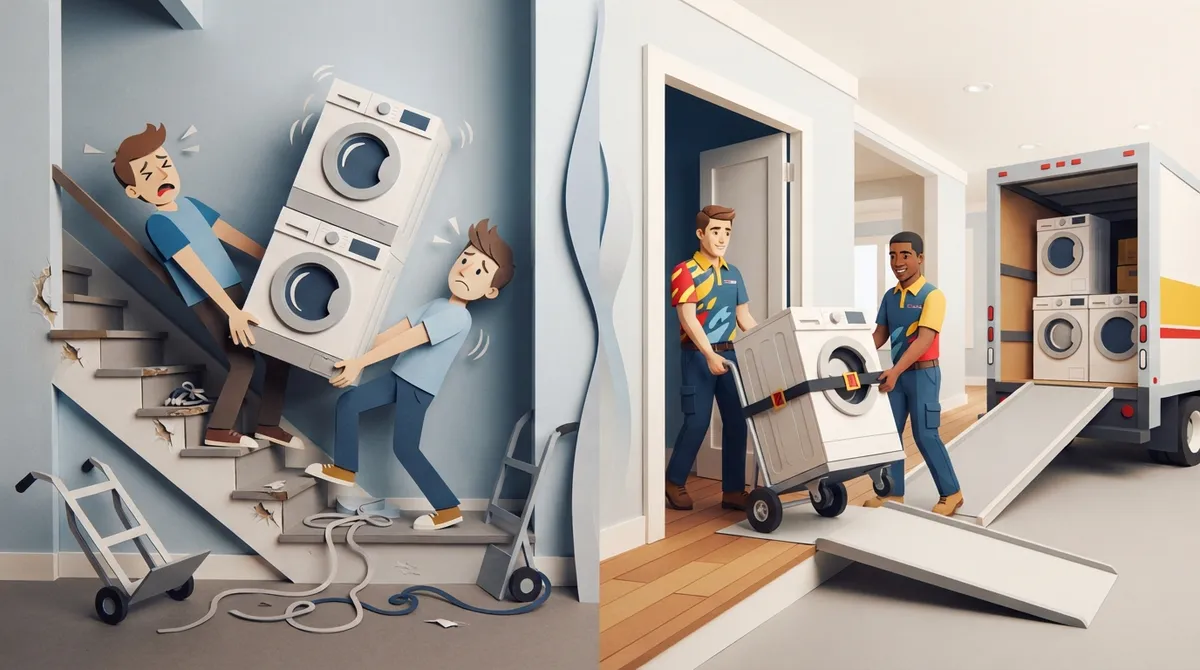
Many people try to move their own laundry machines to save a few dollars. Sometimes that works out fine. But washers and dryers are a risky DIY job for a few simple reasons.
- They are heavy and bulky. Most machines are hard to grip and even harder to steer around corners.
- They have delicate parts inside. A washer drum can bounce around and get damaged if it is not stabilized.
- Stairs and tight doorways add danger. A small mistake can hurt you or damage your home.
- Leaks and loose cords can cause trouble. Skipping prep steps can lead to water on the floor or a damaged appliance.
If you are weighing your options, our comparison of hiring movers vs. a DIY local move breaks down the real tradeoffs in time, cost, and risk.
For retirees, families with young kids, and anyone with a bad back, hiring help is often the smartest and safest choice. There is no medal for carrying a washer down three flights of steps alone.
How to Prepare Your Washer for Moving Day
A little prep goes a long way. Taking care of these steps ahead of time helps protect your machine and keeps your move on schedule. Here is a simple routine for the washer.
- Run an empty cycle. This flushes out leftover water and detergent.
- Unplug the machine. Always cut the power before touching anything else.
- Turn off the water supply. Shut off both the hot and cold valves behind the machine.
- Disconnect the hoses. Remove the water supply hoses and the drain hose, and drain any water left inside them.
- Let it dry out. Leave the door open for at least 24 hours so the inside can dry. This helps prevent mold and musty smells.
- Install the transit bolts. If you still have the manufacturer's shipping or transit bolts, put them back in as directed. They hold the drum steady during the trip.
- Secure the cords and hoses. Tape or tie them so they do not dangle or get caught.
Not sure if you still have those transit bolts? Check your owner's manual or the manufacturer's website. Many manuals explain how to install them and what size you need. If you cannot find the original bolts, ask the manufacturer or a local appliance technician about a replacement set.
How to Prepare Your Dryer for Moving Day
Dryers are a bit simpler than washers, but they still need some care. Here is how to get yours ready.
- Unplug the dryer. Pull the plug before you do anything else.
- Clean the lint trap. Remove all lint from the trap and, if you can, the lint housing.
- Disconnect the vent. Detach the exhaust duct from the back of the dryer.
- Secure the cord. Tape the power cord to the back or side so it does not drag.
- Tape the door shut. Use painter's tape or a similar gentle tape so the door does not swing open. Avoid tape that leaves sticky residue.
A Special Note About Gas Dryers
If you have a gas dryer, slow down. Gas lines are not a DIY job for most people, and many moving crews do not handle them at all. Plan to have a qualified professional disconnect the gas before moving day and reconnect it at your new home.
Never assume your mover will take care of this. Ask the question early, and book a licensed technician if you need one. Safety comes first, always.
How Washer and Dryer Movers Transport Your Appliances
Once the machines are ready, here is how experienced washer and dryer movers usually get them from point A to point B.
- Upright transport: Appliances are generally moved standing upright, the way they normally sit in your home.
- Appliance dollies: These tools make it much easier to roll heavy machines without straining.
- Moving blankets and pads: The machines are wrapped to prevent dents, scratches, and scuffs.
- Straps and tie-downs: The crew secures each appliance to the truck wall so it cannot slide or tip.
Pro tip: do not lay a washer or dryer on its side unless the manufacturer says it is okay. Tipping a machine can damage internal parts, and it is one of the most common mistakes people make when moving appliances on their own.
Measure First: Doorways, Stairs, and Tight Spots
Here is a step that saves a ton of headaches. Before moving day, measure your appliances and the path they have to travel. You will want numbers for:
- The height, width, and depth of the washer and dryer
- Doorways and hallways along the route
- Stairwells, turns, and landings
- Elevator openings, if you live in an apartment or high-rise
- The final spot in your new laundry area
This is especially helpful for luxury apartment residents and anyone moving into a home with narrow halls or tight stairs. Tell your moving company about any tough access points, stacking kits, or unusually long carries when you ask for a quote. That way, they can bring the right crew size and gear, and there are no surprises on the big day.
If you are moving into an apartment, our guide to apartment movers in Polk County covers more on elevators, parking, and building rules.
How Much Do Washer and Dryer Movers Cost?
This is one of the most common questions, and the honest answer is: it depends. There is no single national price that fits everyone. Your quote will usually depend on:
- How long the job takes (labor time)
- How far the appliances are going
- Stairs, elevators, and long carries
- Whether disconnecting and reconnecting is included
- Whether you are moving only the appliances or a full household
To give you a general idea, here are a few published examples. Keep in mind these are not firm prices, and they come from different sources.
| Example | Reported Range | Source Type |
|---|---|---|
| Moving one major appliance | $50–$300 | Cost guide estimate (MovePlan, 2026) |
| Disconnect and reconnect services | $50–$200 | Cost guide estimate (MovePlan, 2026) |
| Disconnect/reconnect, one appliance | $49 | One local company's listing (Exquisite Logistics, 2026) |
| Disconnect/reconnect, washer and dryer pair | $89 | One local company's listing (Exquisite Logistics, 2026) |
Treat these numbers as helpful ballparks, not promises. The best way to know your real cost is to ask for a written estimate based on your exact situation. If you are curious how movers set their rates, our 2026 pricing guide on how movers charge explains it in plain language.
You can also get a free estimate from DynaMight Movers with transparent pricing and no hidden fees.
Questions to Ask Before You Hire Washer and Dryer Movers
Since services differ so much, a few smart questions can save you from a frustrating surprise. Here is a handy list to keep nearby when you call.
- Are you licensed and insured? This protects you and your appliances if something goes wrong. Our tips on spotting licensed and insured movers can help you check.
- Do you disconnect and reconnect appliances? Get a clear yes or no, and ask if there is an extra fee.
- Do you handle gas lines? If you have a gas dryer, confirm who is responsible.
- How do you pad and secure appliances? Listen for mentions of blankets, dollies, and straps.
- Can you handle stairs and tight spaces? Share your measurements and access details up front.
- Is your estimate written and itemized? A clear estimate prevents billing surprises.
- What happens if something is damaged? Ask about coverage and the claims process.
Asking these questions is not being picky. It is being smart. A trustworthy company will welcome them, and the answers will tell you a lot about how they work.
What to Check After Your Appliances Arrive
Your washer and dryer made it to the new place. Nice work! Before you toss in the first load, take a few minutes to double-check everything.
For the Washer
- Remove the transit bolts if you installed them, and keep them for the next move.
- Place the washer on a flat, solid floor and make sure it is level.
- Reconnect the water hoses and check each connection for leaks.
- Run a short test cycle to confirm it fills and drains properly.
For the Dryer
- Confirm you have the right power supply and plug type.
- Reconnect the vent and make sure it is not crushed or kinked.
- For gas dryers, have a qualified professional handle the connection.
- Run a short test cycle to confirm it heats and tumbles normally.
If you notice a leak, a strange noise, or any damage, take photos right away and tell your moving company as soon as possible. Quick reporting makes the claims process much smoother.
Special Situations: Seniors, Estates, and Luxury Homes
Every move is a little different, and laundry appliances can add extra challenges in certain homes.
Retirees and seniors: If you are downsizing or heading to a retirement community, there is no reason to wrestle heavy machines yourself. Patient, careful movers can handle the lifting while you focus on settling in. Our overview of senior moving services in Polk County shares more ways to make this transition gentler.
Large family estates: Bigger homes often mean multiple laundry rooms, long hallways, and extra-large machines. Movers experienced with bulky items can plan the route and the crew size ahead of time.
Luxury homes and apartments: High-end finishes need extra protection. Ask about floor runners, corner guards, and wall padding so your hardwood, tile, and paint stay in perfect shape.
Why Choose DynaMight Movers for Laundry Appliance Moves?
DynaMight Movers is a licensed and insured moving company serving Lakeland, Winter Haven, Davenport, Dover, and the rest of Polk County. We specialize in heavy lifting, specialty items, and careful handling, so your washer and dryer are in good hands from your old laundry room to your new one.
We keep our pricing clear, with free, no-obligation estimates and zero hidden fees. We also pay close attention to your home, using the right gear to protect floors, walls, and doorways. If you would like to see how we treat our customers, you can visit us on Google — DynaMight Movers and read what neighbors are saying.
Not sure whether you need full service or just extra muscle? Our article on labor services in moving can help you decide. And if you want a deeper look at how a heavy-item crew works, check out our heavy lifting moving tips.
For more general guidance on choosing a mover, the Federal Motor Carrier Safety Administration's Protect Your Move resource is a trusted place to learn about your rights and how to avoid moving scams. For broader tips on preparing laundry appliances, you can also read this step-by-step guide to moving a washer and dryer, and review moving guidance on preparing a washer and dryer.
Final Thoughts: Make Laundry Day the Easy Part of Moving
Moving a washer and dryer does not have to be a headache. With a little prep, a few measurements, and the right washer and dryer movers, you can protect your appliances, your home, and your back.
Remember the big takeaways: confirm what your mover includes, prepare each machine properly, have a pro handle any gas lines, and always check your connections after delivery. A few small steps now will save you big stress later.
Ready to take the heavy lifting off your plate? Reach out to the DynaMight Movers team today. You can get a free estimate online, or simply call us at (866) 349-7719 and we will walk you through your options. We would love to help you get settled in, one clean load at a time.
FAQs
Q: How much does it cost to hire movers for a washer and dryer?
A: There is no single national price, since cost depends on labor time, distance, stairs, and whether disconnecting and reconnecting are included. Some cost guides estimate about $50 to $300 per major appliance, but your best bet is a written estimate based on your exact move.
Q: Do movers disconnect and reconnect washers and dryers?
A: It depends on the company. Some crews handle hoses and cords, while others only move the appliances and recommend a separate technician. Gas dryers usually need a qualified professional, so always ask before you book.
Q: Do I need shipping bolts to move a washing machine?
A: If your washer came with manufacturer transit bolts, it is a good idea to install them as directed. They keep the drum steady and help prevent damage during the move. Check your owner's manual or the manufacturer's website if you need replacements.
Q: Can a washer and dryer be moved on their sides?
A: It is best to move them upright unless the manufacturer says otherwise. Laying a machine on its side can harm internal parts. Professional movers typically use appliance dollies, blankets, and straps to keep them standing safely.
Q: What should I check after my washer and dryer are delivered?
A: Make sure the washer is level, reconnect the hoses, and check every connection for leaks. For the dryer, confirm the power supply and vent are set up correctly, and have a pro handle any gas hookup. Then run a quick test cycle for each.